

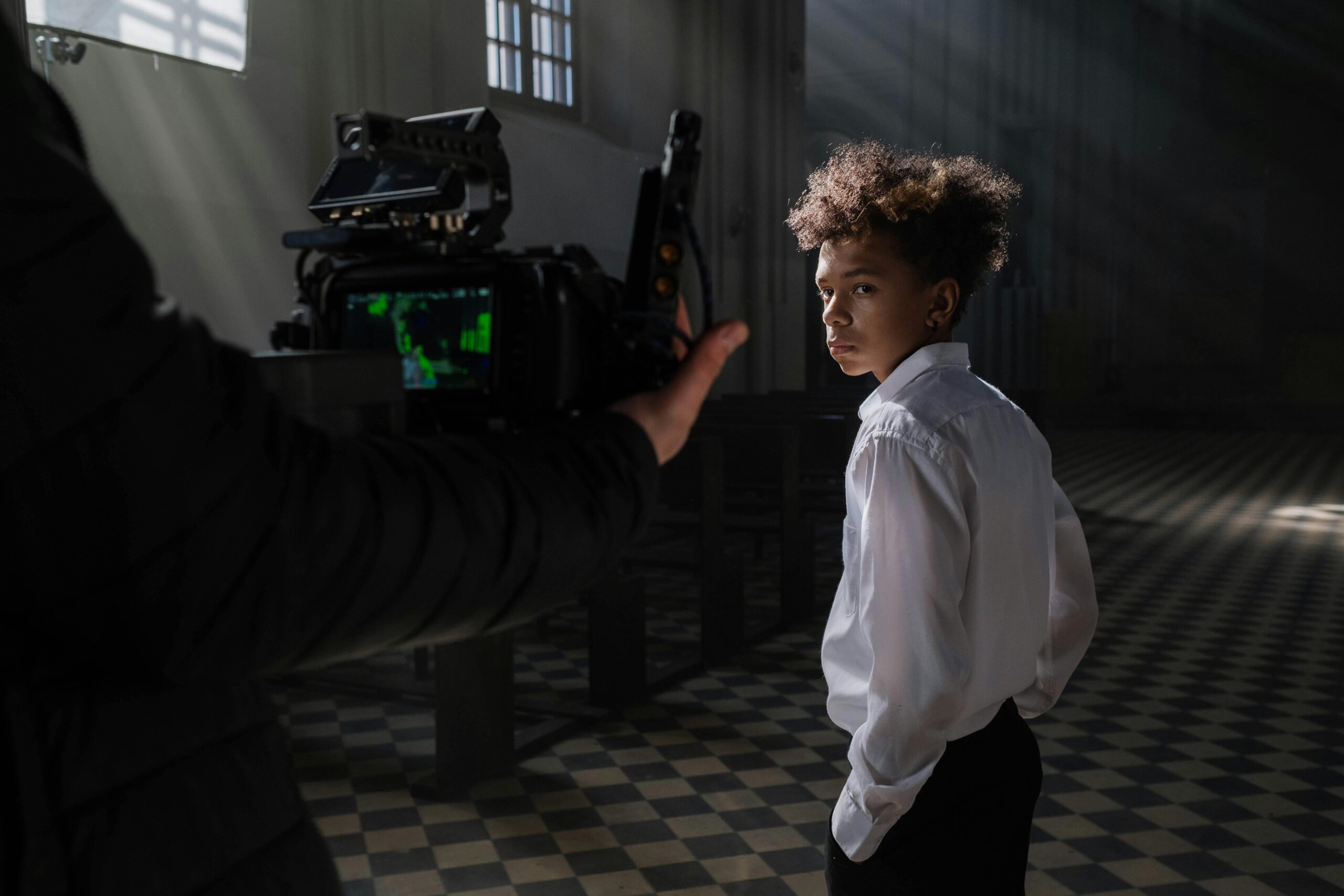

I held my breath.
That’s the thing I keep coming back to. Not the stories themselves. I knew most of them already, in one form or another. It was the way I watched. Sitting in front of the TV, barely breathing, afraid that the sound of my own exhale would drown out what I was hearing.
Because what I was hearing was former child performers speaking as adults with language they never had as children. Naming things that didn’t have names when they were living through them. And I didn’t want to miss a single word.
I recognized that language. Not because I’d read about it. Because I’d spent years looking for it.
Child Star, the Hulu documentary directed by Demi Lovato, isn’t an exposé. It’s not trying to shock anyone. What it’s doing is deeper and, I think, harder: it’s giving a group of people the chance to say what they couldn’t say when they were eight, or twelve, or sixteen, and asking the rest of us to actually listen.
The System
One of the revelations in Child Star isn’t about any individual family. It’s about what the industry figured out in the 1980s and 1990s: kids want to see themselves on screen. Focus groups confirmed it. Networks built around it. And somewhere along the way, children stopped being performers with careers and became the content itself.
Disney discovered that the idea of fame was the hook. Not talent, not story. The promise of being known. The shows were merchandise-friendly. The kids were expected to sing, act, and dance. And when JoJo Siwa’s show cast her as herself (not a character, just JoJo), the line between person and product disappeared entirely.
Here’s what the documentary doesn’t say outright, but what every parent in this industry eventually learns: a child performer who is agreeable, professional, and easy to work with isn’t just a talented kid. They’re a brand. And the parent who shows up the same way (accommodating, grateful, and makes no waves) becomes part of that brand too.
That works beautifully when the child is seven. But kids grow. Their personalities shift. Their bodies change. They push back, or get moody, or want to do something different with their hair. And when the brand starts to shake; when the kid stops being the easy, consistent product everyone signed up for, that becomes a problem for management, for agents, for networks. Not because anything is wrong with the child. Because the asset stopped being predictable.
Most parents walking into their kid’s first audition have no idea that’s the machine they’re entering.
The White Space
There’s a phrase Demi Lovato uses in the documentary that I haven’t been able to shake: she talks about remembering all the white space within her childhood, even though she technically had none. Every hour was accounted for: rehearsals, recordings, appearances, school on set. But the memories have gaps. The body was there. The child, sometimes, wasn’t.
I struggle to admit this (with honesty) but most of my memories of childhood orbit around my ability to please others. I remember some family trips. Some arguments with my parents. Some poor choices I made. And beyond that, I struggle to identify white space I wasn’t trying to fill. The unstructured hours, the afternoons with nothing to prove – if they existed, they didn’t stick. What stuck was the performing. The being good at something. The making people happy.
It’s a pattern more than a diagnosis. It’s one I see in the adults who grew up this way: the memories that survive aren’t the ordinary ones. They’re the ones attached to achievement, to audience, to approval. Everything else fades into background noise.
What Child Star shows, without pathologizing it, is how common this experience is. A three-year-old learning to treat performing like work. A teenager who can’t find a way to feel okay without something to numb the pressure. A glaze that comes over the eyes when someone asks about the good old days.
None of this means performing is inherently harmful. It means that a child under sustained professional pressure needs adults who are paying attention to what they can’t see, rather than what’s just on screen.




Read the Comments +