



There’s a moment some parents recognize like a small throat-clearing in the room.
You’re driving home from set. Leaving a callback. Standing in the kitchen while your child runs lines again. They’re good at it, the work is real, and momentum is a powerful drug.
And you hear something underneath the words.
A tone. A posture. A version of your child that fits the room a little too well. Sometimes it’s funny. Sometimes it’s impressive. Sometimes it’s… not them. Not really.
But it keeps booking.
And then the question arrives:
How do I make sure my child knows who they are when the world keeps rewarding a version of them that isn’t?
A small story from my own life
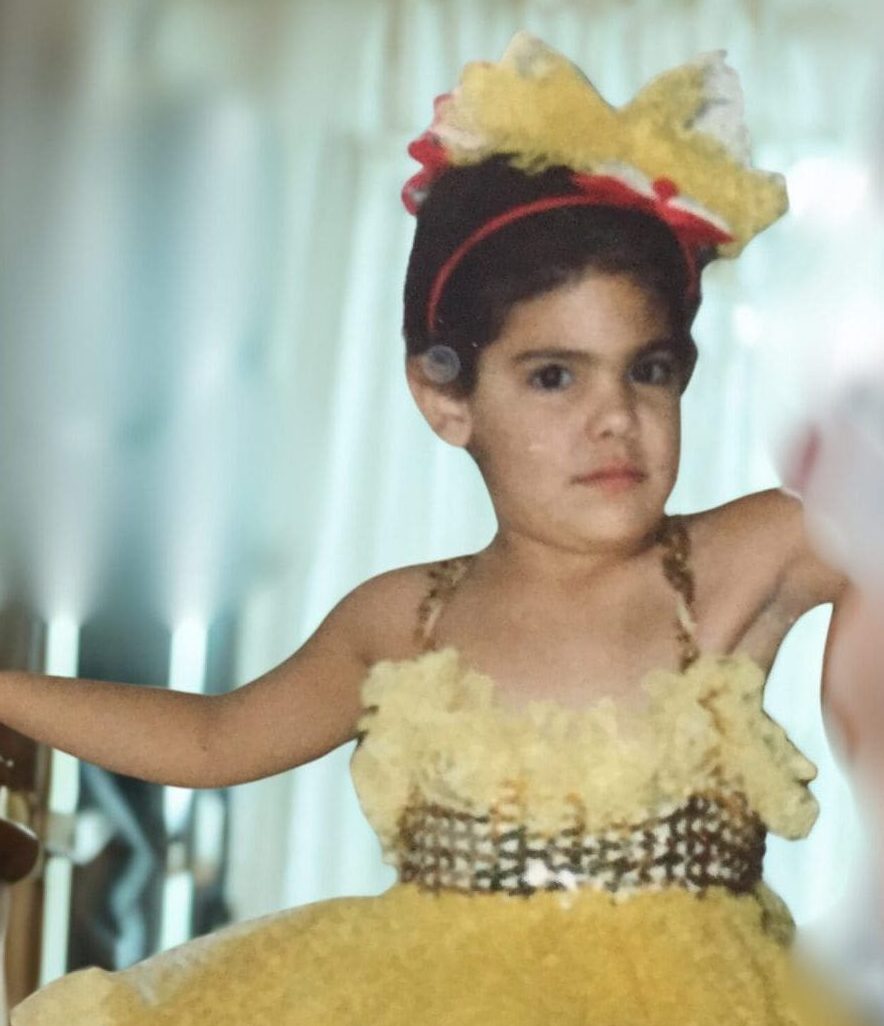
Before I had language for typecasting, I had experience of it.
I was assigned songs I “looked like” I could sing.
Over and over, I was placed in the “ethnic, R&B, soul” bucket. Not because I didn’t love those genres. I did. I still do.
But I wasn’t often invited to sing anything else.
It wasn’t framed as limitation. It was framed as strategy. As fit. As, “This is what works for you.”
And that’s how it starts: not as a villain twirling a mustache, but as a narrowing that looks like clarity.
When you’re a kid, you don’t think, They’re shaping my identity.
You think, This is the version of me they want.
And if you want to belong, you learn quickly.
When “fit” starts shaping the mirror
Typecasting rarely announces itself as a threat.
Most of the time, it arrives dressed as practicality. Speed. Market clarity.
Casting moves fast. Producers want what reads quickly. The industry recognizes patterns and repeats what works. That’s the architecture.
And for a while, it can feel like relief.
Your child has an “in.” A lane. The auditions start to make sense. Things get smoother. You stop explaining from scratch.
It can be thrilling.
But there’s a cost that doesn’t show up in the celebratory posts:
The industry’s need for a repeatable story can eclipse a child’s need to become.
Because childhood (especially pre-teenhood) isn’t built for consistency. It’s built for experimentation. Trying on selves. Dropping them. Picking them back up. Being one thing at school and another thing at home and another thing entirely when nobody’s watching.
That isn’t instability. That’s development.
So when the outside world keeps saying, This version is the valuable one, it starts to shape the mirror.
The cost of being “known” too early
There’s a particular pressure that comes when a child is praised for a narrow slice of personality, or for performing a narrow slice convincingly.
Not because any one role is inherently damaging.
Because repetition teaches the nervous system what “works.” It teaches the brain what gets approval. It teaches the family what creates momentum.
And without anyone intending it, it can teach a child a risky equation:
I am safest when I am castable.
You may see it in small, ordinary moments:
- They describe themselves in industry language.
- They talk about their “type” like it’s a fixed fact, not a temporary costume.
- They start asking whether they should change their hair, voice, vibe to match what books.
- They lose interest in things that don’t translate into an audition room.
Sometimes they lean into the persona because it feels powerful. Sometimes because it feels required. Sometimes because children are incredible at adaptation, and adults are incredible at rationalizing adaptation when stakes feel high.
…which brings us to the second force in this trap.
The scarcity spell
Many families live inside scarcity even when things are going well.
Not always financial scarcity, though that’s real for plenty of people.
Often it’s opportunity scarcity: the fear the phone won’t ring again, the window will close, and resisting a pattern will be the moment the industry forgets you existed.
This is why typecasting can feel like a trap.
Not because you can’t see misalignment.
Because you can see the consequences, real or imagined, of resisting it.
If you feel torn, that doesn’t mean you’re failing.
It usually means you’re paying attention.
You’re holding two truths at once:
- This role could be a meaningful opportunity.
- This role could also pull your child farther from themselves if it becomes the only way they’re seen.
Both can be true without anyone being the bad guy.
Your child isn’t a brand. They’re a whole person.
The industry will always prefer a story that’s easy to repeat.
But your child’s inner life won’t cooperate with that. Real identity is wide. Contradictory. unfinished.
A child can be tender and fierce.
Shy in a room, loud with their sibling.
Responsible on set, chaotic at home.
Serious about the craft, goofy about everything else.
That isn’t confusion. That’s wholeness.
One of the most protective postures a parent can have is this:
Roles are temporary work. Your child’s identity is bigger than any “type.”
You don’t need to turn this into a speech. You can make it a way of narrating life.
A way you frame what happened when they come home carrying a character’s energy like it’s stuck to their skin.
A way you remember, even when the world gets loud, that a child is not a product.
They are not here to be consistent.
They are here to grow.
Your job isn’t to manage the outcome. It’s to protect integration.
When a child is repeatedly asked to perform a persona, especially one that’s misaligned with their natural temperament, the burden of identity continuity can land on the child.
They become the one who has to remember who they are.
Translate what’s “real” and what’s “work.”
Carry the whiplash between public and private selves.
That’s so much for a kid, even a talented one.
Adult responsibility here isn’t controlling every role or finding the perfect project.
It’s containment.
It’s making sure your child has a home base where they are not their casting type. Where they don’t audition for belonging. Where applause doesn’t get to set the terms of who they are allowed to be.
Sometimes that looks like small language shifts:
- “That’s a character you played,” instead of “That’s you.”
- “What did it feel like to wear that role?” instead of only “You were amazing.”
Not because “amazing” is wrong.
Because it’s incomplete.
Sometimes it looks like guarding pieces of their life that will never be monetized. Parts that don’t translate into headshots or bios. Parts that exist because they’re alive.
And sometimes it looks like a private decision you make as a parent:
We will not let the industry be the loudest narrator of our child.
A note on the pre-teen years
Pre-teenhood is already a super strange bridge.
They’re building a self through friendship, comparison, belonging, experimentation. Add a public narrative on top of that and it gets persuasive fast.
When one persona keeps being rewarded, it becomes magnetic.
And when a child is praised publicly as “the tough one,” “the funny one,” “the troubled one,” “the perfect one,” it can narrow their permission to be anything else.
Not overnight.
Slowly. Like water shaping stone.
This is why your steadiness matters more than your perfection.
The goal isn’t to prevent influence.
It’s to make sure influence doesn’t become ownership.
Closing reflection
If you’re in this tension right now, you don’t need a dramatic overhaul.
You need a place to tell the truth about what you’re noticing, without being told you’re overreacting, and without being handed a checklist that treats your child like a problem to solve.
A few questions to sit with:
- When your child keeps playing roles that don’t fit, what do you notice in them afterwards? Are they energized, depleted, detached, proud, confused?
- Where does your fear live more: losing opportunities, or losing your child’s sense of self?
- What parts of your child feel protected by the work, and what parts feel edited out?
- If success included wholeness (not just bookings), what would you want the next year to feel like for your family?
If you want a steady space to unpack this, I work with parents navigating identity pressure in real time. Not to “fix” a child or outsmart the industry, but to protect the long view: their personhood, your relationship, and a version of success that doesn’t require self-erasure.






Read the Comments +